Chapter 4 of our textbook talks about folk culture versus
popular culture. Culture is essentially two different types: types stemming
from daily necessities like shelter and food, and types involving leisure activities.
A part of folk culture that I’m particularly interested in is traditional
crafts.
Mongolia has a rich and vibrant folk culture tradition, probably
because of its rich rural, nomadic, pastoral history. Two traditional crafts associated with nomadic
culture are felt making and embroidery.
Felt making began and is still practiced today as a part of
providing shelter. Nomads make felt to
cover their gers (yurts) and make carpets shoes, cushions and other decorative
items with it ( http://www.feltmongolia.mn/traditinoal.html).
 |
| handmade felt slippers from here. |
Embroidery is also tied to the ger, particularly in the west
where the Kazakhs are more prevalent. Mongolian embroidery primarily uses a
chain stitch to outline the design and to fill it in. Embroidery pieces are for decoration, to hide
the wood frame of the ger and to add warmth to a home. Mothers begin embroidering
wall hanging for their children’s wedding when they are still small.
In the above picture, you can see that the wall hanging is unfinished. There are a couple reasons for that--there is a signature/inscription at the bottom, the bottom will not be seen so doesn't need to be finished, and also as a reflection of their Muslim faith (only God creates perfect things).
Next time, we'll talk about the language of Mongolia.
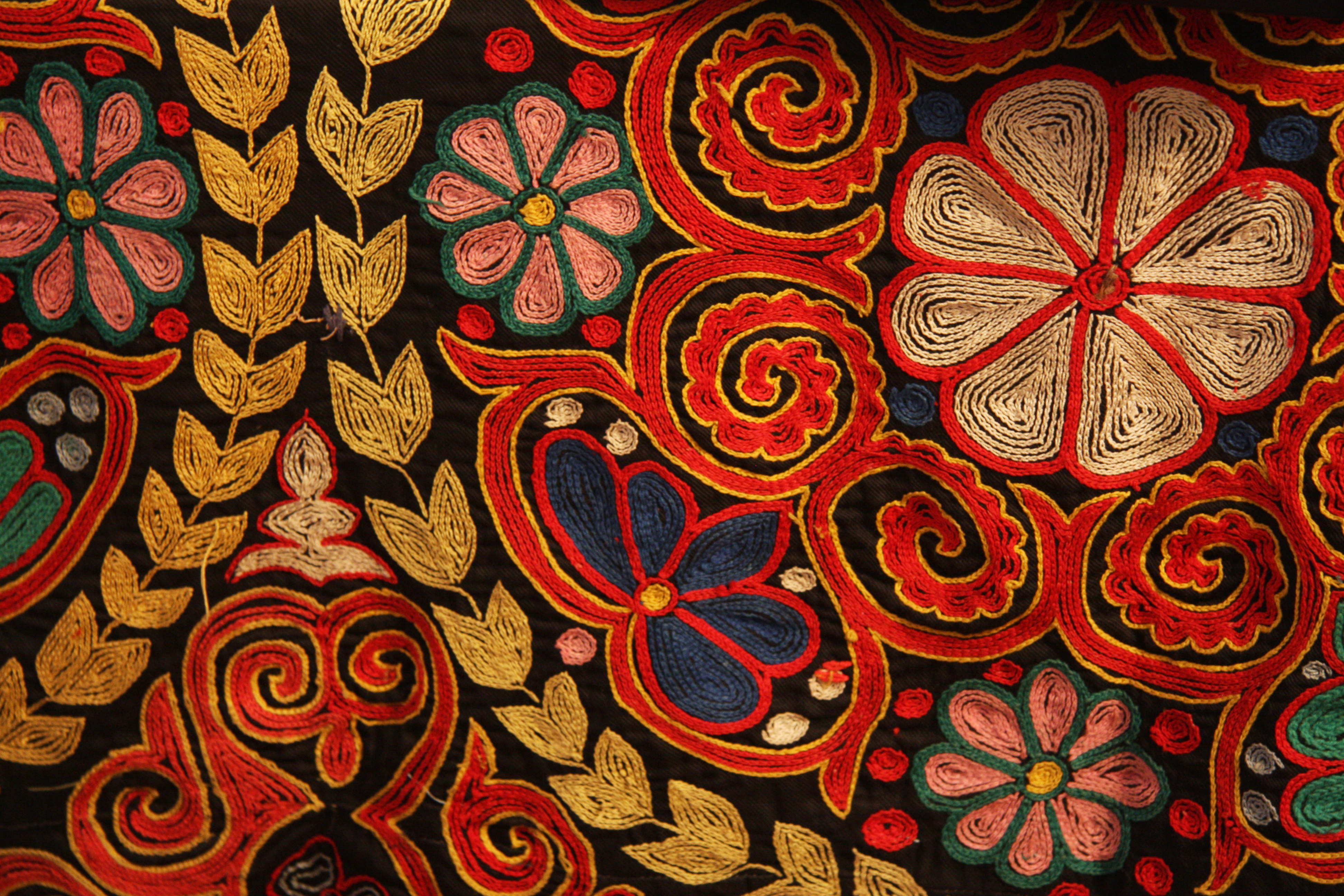 | ||||
| embroidery on a Kazakh rug purchased in Mongolia. |
 | ||
| a traditional wall hanging |
In the above picture, you can see that the wall hanging is unfinished. There are a couple reasons for that--there is a signature/inscription at the bottom, the bottom will not be seen so doesn't need to be finished, and also as a reflection of their Muslim faith (only God creates perfect things).
Next time, we'll talk about the language of Mongolia.

No comments:
Post a Comment